



From the Mayor: My State Legislative Priorities List
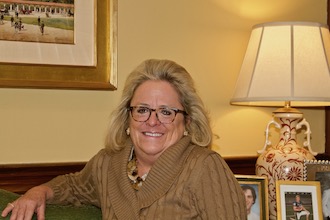
By Mary C. Marvin, Mayor, Village of Bronxville
Dec. 20, 2017: As we approach a new legislative session in Albany, my colleagues and I on the state and local levels developed our legislative priorities list. It can prove to be an exercise in futility, as we often joke that we could simply re-date last year’s list and re-deliver to Albany. But it is our duty as a collective group to encourage the governor and our legislators to provide local governments with the resources and flexibility needed to deliver essential municipal services in the most cost-effective manner for the taxpayers we serve.
Since a state-local fiscal partnership is essential to economic vitality, unrestricted state aid is needed now more than ever given the 2% cap, which is actually below one-half of one percent due to the application of a formula.
Unrestricted State Aid: Inexplicably, however, cities and villages have not received an increase in unrestricted aid (AIM funding) since 2008. School districts, on the other hand, have experienced significant year-to-year increases far exceeding the funding of the entire AIM program to municipalities. A fairly thought-out “revenue sharing” formula intended to redistribute state tax revenues has been disregarded, making the revenue stream inconsistent, unfair, and unpredictable.
Tax-Exempt Entities: Tax-exempt properties also present a fiscal challenge. According to the New York State Comptroller’s Office, $680 billion in market value of real property in New York State (27%) is exempt from municipal taxes, equating to approximately $17 billion yearly in foregone property tax revenue. However, the tax-exempt entities need essential municipal services. A proposal that would permit municipalities to impose charges just to defray the cost of local services including police and fire protection, street maintenance, and lighting seems equitable and would be fair. The Commonwealth of Massachusetts, in a unique experiment, called upon all their nonprofits to voluntarily contribute commensurate with the services they received, and many have responded in kind. Even if municipalities recoup only a portion of the expenses they incur serving tax-exempt organizations, it would be a step forward.
The state-imposed tax cap of 2% needs to exempt capital project spending from the cap calculation as the state does for school districts. Net-net, the unintended consequence of the tax cap is that state infrastructure is arguably in its worst condition in a generation and not soon to be repaired in most communities.
Unfunded Mandates: State mayors are also united in supporting legislation to constitutionally prohibit the enactment of laws that impose an unfunded mandate or fiscal burden on local communities. All current unfunded mandates should also be required to sunset in two years unless it can be demonstrated that the mandate is essential and a funding source is found to offset the cost to local governments. Currently, there are more than 200 state unfunded mandates.
Wicks Law: One particularly onerous unfunded mandate is the Wicks Law, dating back to 1912 and affecting both village and school construction projects. Under the current law, separate plumbing, heating, electrical, etc. – virtually all contracts on a construction project – must be separately bid. The coordination issues involved often lead to costly delays, increased administration costs, and lawsuits, raising the cost of projects anywhere from 8% to 30%.
Given the onslaught of mandatory unfunded initiatives directed our way, elected officials are also seeking legislative initiatives that would add to our revenue base if New York taxpayers are ever to lose their dubious distinction as the most highly taxed citizens in the nation.
A Revenue Source: One major revenue source is the restructuring of the gross receipts tax (GRT) levied on the gross operating income of utility companies operating within a municipal border. Currently, communities have the option to impose a tax at the rate of 1%, although Buffalo, Yonkers, and Rochester have the flexibility to impose up to a 3% tax. Westchester communities are seeking legislation to allow all communities to be treated fairly at the higher rate. In recognition of the new cellular technology, the State of New York and the City of New York have added wireless technology to their gross receipts tax calculation. Local governments ask for permission to replicate these laws and add cellular telephone services to the GRT equation.
What I have shared is just a small sampling of the changes needed in Albany to alleviate the unsustainable tax burden at the local level.
Top Ten "Wish List": The following is the top ten “wish list” of local elected officials from across the state.
• Increase unrestricted state aid
• Fix the tax cap to exempt capital improvements
• Increase funding for water and sewer infrastructure
• Prohibit unfunded state mandates
• Increase state funding for local highways
• Authorize municipalities to charge for services provided to tax-exempt properties
• Create and enhance tools to address abandoned property and downtown redevelopment
• Expand and enhance sales tax measures
• Remove barriers to intermunicipal health insurance plans
• Restructure and reform the gross receipts tax
Sadly, no longer can local government just advocate for positive change or for what they might need. We now have to play defense and constantly monitor the fiscal and regulatory impacts of potential bills.
As one of my colleagues said, “If local governments are not at the table, we may find ourselves on the menu.”