


From the Mayor: Bronxville Introduces New Right-of-Way Tree Planting Program to Galvanize Residents to Help Restore Village's Tree Canopy:
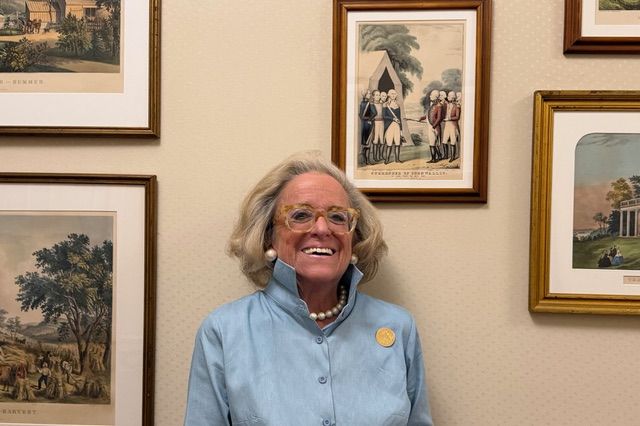
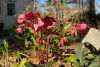
Photo by N. Bower
By Mary Marvin, Mayor of Bronxville
March 4, 2026: “The best time to plant a tree was 20 years ago. The second best time is now.” Chinese Proverb
I am hoping that you are aware that the Village of Bronxville is introducing its new Right-of-Way (ROW) Tree Planting Program, galvanizing residents to help restore the Village’s tree canopy by requesting a new tree in the Village-owned right-of-way adjacent to your property through a cost-share model.
A limited “soft launch” began this fall, with the full program rolling out in spring 2026. Thanks to a $75,000 matching contribution from the Bronxville Historical Conservancy, paired with Village funds, the program offers a sustainable way for residents to contribute to canopy renewal across the community.
Through this initiative, residents can apply under two options: a Subsidy Option, covering up to 50% of the total tree and installation cost, or a Self-Funded Option for those who wish to contribute the full cost. All applications are reviewed by Village staff to ensure proper siting and species selection and trees are professionally installed by approved vendors.
For more information, click here to visit the Village's ROW Tree Planting Program page.
As we all know, nothing has more lasting value to a community than its tree stock as the benefits of trees are so multifaceted: aesthetic appeal, cooling properties, improvement of air quality, reduction of energy use and atmospheric carbon dioxide, habitat for wildlife, reduction of soil erosion and excess runoff, water absorption, barrier to noise, a natural screener, food source and a source of lumber and pulp.
Trees also serve to mask concrete walls, driveways, parking lots and unattractive views while absorbing dust and reducing glare.
Of great importance is the role they play on school property and playgrounds as trees reduce UV exposure by 50% providing protection to children playing outdoors.
Other benefits that might not be so obvious on first blush include:
Just three trees strategically placed around a single-family home can cut summer air conditioning needs by 50%.
Trees placed in commercial areas can lower temperatures in a parking lot and break up the blacktop, “heat islands.”
Trees on private property also produce great monetary benefit as studies have demonstrated that 10 to 23% of the value of a residence is based on its tree stock.
An efficient carbon dioxide absorber and oxygen provider, the removal of just one canopy tree takes away the daily oxygen supply for four people.
Less tangible, but equally important are the studies that have shown that being around trees can have a calming effect, actually relaxing brain waves and reducing heart rate while offering our eyes visions of beauty.
In the same vein, trees have great value in marking the seasons, calming a stark landscape, acting as neighborhood landmarks and points of identity. They also serve as symbolic links to the past when other connections have long since disappeared. One cannot help but notice the enormous value our predecessors placed on our tree canopy just by the names of so many of our streets – Red Oak, Elm Rock, Chestnut, Sycamore, and Pine just to name a few.
Originally a native woodland village with our homes built under a canopy of deciduous trees, not only have many of these trees been lost due to the ravages of storms, disease and age, but they have been replaced with ornamental trees, which are not native and do not restore the canopy, hence the need for a new initiative.
It is a particular concern because of the Village’s one square mile or 640 acres, only 70 acres can be considered park land.
The village government must lead by example ensuring that what native trees we have are healthy by keeping them trimmed and fertilized as well as doing additional planting, hopefully in partnership with you.
We ask you to help us preserve our most precious natural resource by taking the time this spring to check the health of your trees as well as joining our tree program and/or planting more native species on your own property. If you have trees on property borders, it is also so beneficial to work with your neighbors to trim, fertilize and do periodic borings for “health checks” as opposed to removal.
As Marilyn Wood Hill so eloquently penned in the introduction to the Historical Conservancy’s publication, Defining the Landscapes of Bronxville, which was meticulously researched and compiled by former Mayor Nancy Hand, “It is the close interrelationship of natural and man-made environments that has given identity to the special place of Bronxville, and we need to exercise a greater stewardship in preserving the whole, so that what we leave for future generations will not only be a place to live, but also a place to love.“



Government & History Directory
Bronxville is a quaint village (one square mile) located just 16 miles north of midtown Manhattan (roughly 30 minutes on the train) and has a population of approximately 6,500. It is known as a premier community with an excellent public school (K-12) and easy access to Manhattan. Bronxville offers many amenities including an attractive business district, a hospital (Lawrence Hospital), public paddle and tennis courts, fine dining at local restaurants, two private country clubs and a community library.
While the earliest settlers of Bronxville date back to the first half of the 18th century, the history of the modern suburb of Bronxville began in 1890 when William Van Duzer Lawrence purchased a farm and commissioned the architect, William A. Bates, to design a planned community of houses for well-known artists and professionals that became a thriving art colony. This community, now called Lawrence Park, is listed on the National register of Historic Places and many of the homes still have artists’ studios. A neighborhood association within Lawrence Park called “The Hilltop Association” keeps this heritage alive with art shows and other events for neighbors.
Bronxville offers many charming neighborhoods as well as a variety of living options for residents including single family homes, town houses, cooperatives and condominiums. One of the chief benefits of living in “the village” is that your children can attend the Bronxville School.
The Bronxville postal zone (10708, known as “Bronxville PO”) includes the village of Bronxville as well as the Chester Heights section of Eastchester, parts of Tuckahoe and the Lawrence Park West, Cedar Knolls, Armour Villa and Longvale sections of Yonkers. Many of these areas have their own distinct character. For instance, the Armour Villa section has many historic homes and even has its own newsletter called “The Villa Voice” which reports on neighborhood news.
Link to Village of Bronxville One Square Mile Monthly Newsletter
Village of Bronxville Administrative Offices
337-6500
Open 9:00am - 4pm excluding holidays and weekends
Bronxville Police Department
337-0500
Open 24 hours
Bronxville Parking Violations
337-2024
Open 9:00am - 4pm excluding holidays and weekends
Bronxville Fire Deparment
793-6400
Government & History Recent Articles






Quick Links
Newsletter
MyhometownBroxnville reserves the right to monitor and remove all comments. For more information on Posting Rules, please review our Rules and Terms of Use, both of which govern the use and access of this site. Thank you.
The information presented here is for informational purposes only. While every effort has been made to present accurate information, myhometownBronxville, LLC, does not in any way accept responsibility for the accuracy of or consequences from the use of this information herein. We urge all users to independently confirm any information provided herein and consult with an appropriate professional concerning any material issue of fact or law. The views and opinions expressed by the writers, event organizers and advertisers do not necessarily represent those of myhometownBronxville, LLC, its officers, staff or contributors. The use of this website is governed by the Terms of Use . No portion of this publication may be reproduced or redistributed, either in whole or part, without the express written consent of the publisher.
Copyright © 2009 myhometownbronxville.com, All rights reserved.