



Westchester Water Quality Problems: Take Survey
By Tracy Brown, Director, Save the Sound and Lisa Giuffra Diaz, Managing Partner, Turf Advisory
Sep. 26, 2018: Like that of many counties in the U.S., the Westchester sewer system was constructed almost 100 years ago and is desperately in need of modernization. For decades, the sewer lines that run under Westchester streets and lawns have been leaking raw sewage into our waterways, causing low oxygen levels, high fecal bacteria levels, and long-term harm to local waterways, including Long Island Sound and the Hudson. There is a pressing problem that needs to be addressed.
To better engage residents in solutions, Save the Sound and the Nature Conservancy are conducting a survey to better understand residents' attitudes about water. Share your opinion. Complete this five-minute survey on water and you’ll be eligible to win a $50 gift card.
https://www.surveymonkey.com/r/9BJQVT3
The Westchester Water Challenge
Because of insufficient maintenance and repair, our sewage system suffers from high levels of leakage and lack of modern sewer catchment, which results in sanitary sewer overflows, combined sewer overflows, partial treatment at county wastewater treatment plants, and the unnecessary treatment of rainwater.
To make matters worse, there are certain municipalities, including the City of Mount Vernon, that are facing consent orders from the EPA and the Department of Justice for failure to address sewage overflow into the Hutchison and Bronx Rivers since 2003--a blatant violation of the federal Clean Water Act.
Westchester communities are among the wealthiest in the nation; however, local water quality is seriously degraded, receiving a C- in the latest Long Island Sound water quality report card. Save the Sound’s water quality monitoring program has been documenting significant bacterial pollution in Westchester waters since 2013, confirming what the state and federal governments already know--local waterways are chronically polluted with fecal bacteria.
The Cost of Resolution
According to the EPA and the Department of Health, repairing and sufficiently upgrading Westchester’s sewage collection infrastructure, including pumps and pipes, will cost approximately $600 million. Avoiding proactive maintenance and responding only to system failures, the typical approach our municipalities take increases that cost and exposes residents to disease-causing pathogens, representing a serious health hazard to Westchester residents.
The time is ripe to explore public-private partnerships ("P3"s) for the operations and maintenance of our sewage infrastructure. This would offer an opportunity to create a fully-integrated countywide system similar to the successful approach used in Nassau County, where a private business now operates the county’s wastewater treatment system under a 20-year contract. The projected savings for Nassau County residents is $158 million.
A public-private partnership would also provide an opportunity to implement modern water management systems, including the use of sensors that monitor quality of water, assess the condition of pipes, and reduce maintenance costs by embracing conditioned-based maintenance and sensor enhanced catchments. Modern sensor-enabled sewers are able to quickly identify issues that can be addressed before sewage overflows or backups occur. Moreover, wider implementation of innovative green solutions, including stormwater capture parks, pervious pavement, and green rooftop gardens, could reduce rain-triggered sewage overflows, improving local water quality as well as the quality of life for Westchester residents.
Possible Public-Private Partnerships Solutions
As a first step toward taking advantage of the synergies of centralized planning, procurement, and operations among the 47 districts in Westchester, a joint powers authority ("JPA") could be created to provide wastewater services to municipalities throughout the county potentially under the leadership of the office of the county executive. Once formed, a Westchester JPA could enter into a P3 to design, build, finance, operate, and maintain the facilities.
Unquestionably, convincing both the political leaders and citizens of the 47 different municipalities of Westchester to form a combined Westchester JPA would require a grassroots communications campaign that conveys the value of the centralized approach.
Westchester has an existing network of citizens and organizations concerned about water quality, including Save the Sound, Sustainable Westchester, the Bronx River Alliance, the Hutchinson River Restoration Project, Riverkeeper, and Federated Conservationists of Westchester, among others, who appreciate the importance of investing in water infrastructure. We hope this survey will help foster a conversation on how to best solve Westchester’s water challenges.
Thank you for your participation in the water survey:
https://www.surveymonkey.com/r/9BJQVT3
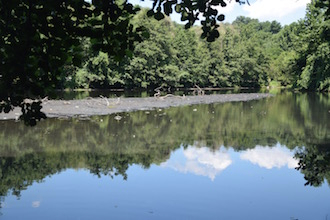
Photo by A. Warner
Editor's note: As a public service, MyhometownBronxville publishes articles from local institutions, officeholders, and individuals. MyhometownBronxville does not fact-check statements therein, and any opinions expressed therein do not necessarily reflect the thinking of its staff.