
From the Mayor: College Commencement Addresses: The Disgrace of Canceling Speakers
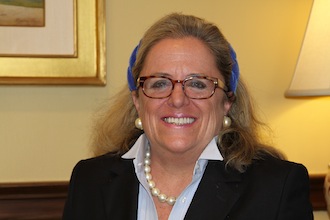
Jun. 4, 2014: At this time of year, I am a keen observer of commencement addresses, having spent weeks writing one to deliver at the Bronxville High school graduation of 2008. It was the honor of my life.
This past month, I was struck first by the number of extremely accomplished, groundbreaking, brave people who were disinvited or who respectfully backed out as commencement speakers after student and/or faculty protests.
Smith College missed out on one of the world's most prominent and powerful women, Christine Lagarde, because "she leads an imperialistic and patriarchal system," according to student organizers and just listening to her would be paramount to endorsement. What a lost moment to hear the triumphs and travails of a fellow woman who has navigated a traditionally male sphere.
To her credit, the president of Smith College, Kathleen McCartney, refused to rescind the invitation, stating that she is "committed to leading a college where differing views can be heard and debated with respect." However, Ms. Lagarde canceled, given the protests.
A similar situation occurred at Rutgers when Condoleezza Rice gracefully bowed out after not only students but the faculty council said just listening to her "was encouraging a world that justifies torture."
Completing the First Amendment repression hat trick, Haverford College caused Robert Birgeneau, former chancellor of the University of California, Berkeley, to withdraw as commencement speaker. Students wanted him, as condition of attendance, to formally apologize for allowing police to use batons at an Occupy protest in 2011. Truth be told, Chancellor Birgeneau actually launched an investigation after being disturbed by a videotape of the baton use.
Two commencement speakers who were concerned by this recent trend chose to speak to the subject: former Princeton President William Bowen, who pinch-hit at Haverford for Chancellor Birgeneau, and Mayor Michael Bloomberg, first choice at Harvard.
Titling his speech "Don't Major in Intolerance," Mayor Bloomberg questioned how we got to the point where the First Amendment only exists if free speech conforms to one's own view.
To paraphrase, Mayor Bloomberg believes universities and even high schools lie at the heart of the American experiment in democracy and should be the meeting place of two values: freedom and tolerance. Places of education should be the nexus where people of all backgrounds and beliefs can come to study and debate ideas freely and openly.
To illustrate his concern about the lack of intellectual diversity on many college campuses, he noted that in the 2012 presidential race, 96% of all campaign contributions from Ivy League faculty went to Barack Obama. To quote Mr. Bloomberg, "Diversity of gender, ethnicity and orientation is important. But a university cannot be great if its faculty is homogeneous," or, as he said even more succinctly, "A liberal arts education must not be an education in the art of liberalism."
At Haverford, Dr. Bowen made the point that prior to the recent controversies, historically someone's presence at a university to speak never implied that there was agreement by the university or any component of it with all of the views or actions of a speaker. To hold to that standard would effectively preclude any person in an active public life. Dr. Bowen believed that Chancellor Birgeneau was condemned by a self-chosen jury without hearing any counterarguments.
This brings to mind the Duke men's lacrosse case when 88 faculty members signed a letter implying the charges against the players were true just two weeks after the incident and no formal evidence. The highly educated faculty members completely ignored the presumption of innocence that is entitled to every American. In the end, the university was forced to recompense the young men with settlements in the tens of millions of dollars.
Father Theodore Hesburgh, the legendary president of Notre Dame, probably handled these situations best when he defended President Obama's right to speak at Notre Dame despite some very different social views.
Speaking in defense of the Obama invitation, President Hesburgh said, as quoted by William Bowen, that "Notre Dame was both a 'lighthouse,' where the beliefs of the Church could be promulgated without qualification, and a 'crossroads' where people of every faith and every belief could come to discuss controversial issues and learn from each other."
I believe we must be diligent in making sure our children's schools and our own alma maters encourage openness to many points of view and mutual respect when all minds are not in agreement and encourage vigorous and fair debate and the art of listening. If students attend our institutions and leave with ears and minds closed, we have all failed.