
From the Mayor: Budgets, Taxes, and Financial Health
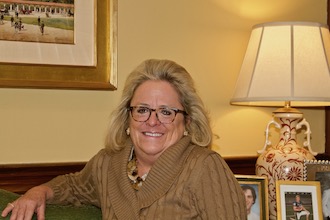
By Mary C. Marvin, Mayor, Village of Bronxville
Feb. 21, 2018: Last week, I wrote about longevity and stress reduction. In a complete one-eighty, I am focusing on budgets, taxes, and financial health–proven stress inducers!
Our village budget must be approved and filed with the state by May 1, so the staff, trustees, and I are already culling numbers and making projections as to fluctuations in our big cost drivers.
As background, our last village budget was $9,649,646. At this juncture, we know we have scheduled contractual raises for employees as well as a projected health care cost increase of 5% to a staggering $1,930,000.
In the positive news category, Moody’s has called our current credit position “exceptional.”
Our Aaa rating far surpasses the median rating of Aa3 for U.S. cities. Moody’s cited our “robust” financial position, negligible debt burden, and a mid-range pension liability.
Our cash balance as a percentage of operating revenues (46.9%) exceeds the U.S. median with an impressive increase from 2013 on. Our fund balance as a percentage of operating revenues (47.3%) is notably higher than other Moody’s-rated cities nationwide. Our full value per capita ($477,736) is materially above the U.S. median and again increased significantly from 2013. In addition, our median family income equals 378.7% of the U.S. level. Our village’s total full value ($3.1 billion) is slightly stronger than other Moody’s-rated cities nationwide.
In addition, our debt and pension liabilities are low across the spectrum. The net direct debt to full value (0.6%) is below the U.S. median; the adjusted net pension liability to operating revenue (1.3x) is consistent with the U.S. median.
However, placing the village’s financial position against the backdrop of state and federal financial changes of late paints a much bleaker picture.
Governor Cuomo recently unveiled his projected executive branch budget with a price tag of $168 billion, representing a $4.4 billion deficit, the largest gap in the state budget since 2013.
What is most concerning to local governments is the governor’s refusal to increase direct tax dollar aid to municipalities.
Unchanged for nine straight years, municipalities receive a combined total of $715 million, while corresponding school districts receive $24 billion in taxpayer give back. In fact, the governor’s proposed budget includes a $770 million school aid increase, equating to more than the entire municipal subsidy. Infrastructure funds for road repair and maintenance will also remain flat at $438 million, shared statewide. Currently, of each of your tax dollars sent to Albany, 29 cents comes back to Bronxville.
On the federal level, for each tax dollar New Yorkers send to Washington, we receive 84 cents back. The national average is $1 to the Feds and $1.18 returned back to the home state.
Add to this a record high amount of tax-exempt property in New York representing 30% of the property north of New York City. This translates into a $457 billion tax loss. Approximately 23% of the property in our village is tax exempt.
On the national level, I attended the Conference of Mayors last week, and every tax expert brought in to speak truly had no idea of SALT’s (state and local taxes) impact and validity. Governor Cuomo has offered several methods of mitigating the effects, but they are subject to legislative approval and judicial review and he has joined the governors of Connecticut and New Jersey, the three hardest hit states, in commencing a lawsuit.
As a small counterbalance, sales tax revenue did increase statewide, up $620,000 to $16.6 billion, and 850,000 jobs were added in the state last year. In a tale of two New Yorks, 90% of those jobs were generated from Rockland County south. The state pension fund is extremely healthy, with only Wisconsin and South Dakota in better relative stead, and last year’s rate of return was 4.12%
All of these trends and indices must be weighed and factored in as we craft our local budget. As an economist at the Mayors Conference recently said, “New York communities cannot have property taxpayers as their biggest exports.”
Editor's note: As a public service, MyhometownBronxville publishes press releases, statements, and articles from local institutions, legislators, and candidates. MyhometownBronxville does not fact-check statements therein, and any opinions expressed therein do not necessarily reflect the thinking of its staff.